All posts by singlemalt

Native Angeleno and Industrial real estate agent since 1994.

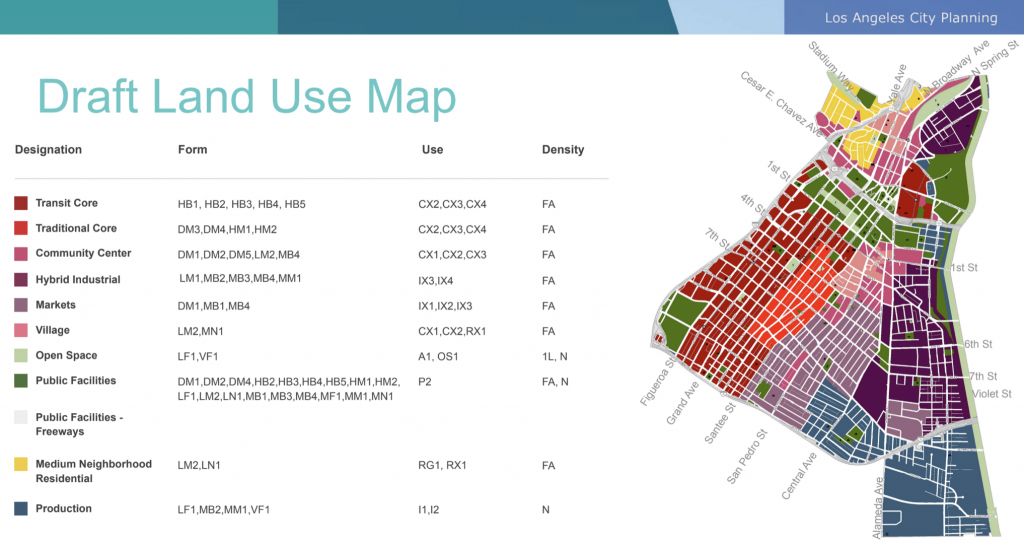
Draft Zoning Map of DTLA

The above map is a draft version of the Downtown Los Angeles Map of Land Use and Zoning. On the left is the Financial Distict and South Park while on the right is the Warehouse District and Arts District.

The City Planning Commission is updating the Downtown Plan for future growth and changes in land use. The new plan will set a new direction for the future of DTLA to guide the physical development of neighborhoods, and establish goals and policies for land use in addition to a range of planning topics, including streets and open space, urban design, mobility, and arts and culture.

Heavy Industrial zoning would be removed. A new Hybrid Industrial Zone would dominate in the Arts District.

In the upper right section the Cornfield Arroyo Seco Specific Plan (CASP) area encompasses a large area sometimes known as the North Industrial District. Older generations may refer to it as part of Chinatown or Dogtown.

In a June 14, 2021 letter by the Chinatown Stakeholders to the Planning Commission, CASP was addressed per the below excerpt which is somewhat critical.

In the Cornfield – Arroyo Seco Specific Plan (“CASP”) adopted in 2013, City Planning attempted to promote infill development in the CASP area but also sought to limit the percentage of residential space in the floor area of new projects. This had the unintended effect of discouraging new development even at a time when other parts of the Central City were experiencing a development boom. The only project within the CASP area that has been approved since adoption of CASP (1457 N. Main St., with 244 live/work units) moved forward only as a result of the Central Area Planning Commission granting (in May 2020) an exception from CASP’s limitation of residential uses not exceeding 15 percent of the floor area. The City Council subsequently approved Councilmember Cedillo’s motion (Council File No. 13-0078-S2) directing City Planning to review the land use incentives in CASP to determine whether they had the net effect of discouraging the production of mixed-income housing.

In addition to the above commentary, the Shimoda Design Group submitted its criticism of the draft plan as per below excerpt:

The draft plan website states “Several years ago, City Planning set out to create a modern and efficient zoning system for Los Angeles. The proposed approach aims to establish a new Zoning Code that is more responsive to the needs of Los Angeles’s neighborhoods, in addition to being easier to use.”

These are noble goals, but the current draft of the code does not show itself to be more responsive to local needs, nor is it easier to use. We believe that the zoning sections regarding Form, Frontage, Standards & Use and Density are too prescriptive and need to be revised to allow for creativity and diversity in aesthetics and construction. As it stands this document is too granular and contains many contradictions in its prescription. The density and the complexity of the current version will create an administrative nightmare for the city in its implementation and interpretation. Many of the prescriptions for dimensional minimums and maximums are not reflective of real market conditions and place unnecessary limitations on creativity. The code will inadvertently create requirements that will effectively neuter Los Angeles as a competitive and desirable place to invest in. The result will negatively impact the future of Los Angeles.

We strongly believe that the current draft needs further revisions and input from the professional design and development community prior to adoption. The draft analysis of the Downtown, Arts District, Little Tokyo, and Chinatown districts in particular need to be reconsidered and not be defined by transitory cultural associations, a form-based code or by prescribed use requirements that will not evolve over time to reflect the community that it serves. We strongly believe and support the up zoning of all of these areas to increase density and affordability.

The CASP is a land use document that governs a 600-acre industrial area interspersed with clusters of residential neighborhoods, commercial activity, City-owned land, affordable housing developments, and open spaces, such as the Los Angeles State Historic Park (the “Cornfield”). The area contains 3.7 million square feet of industrial space—the most
prevalent use in the CASP—of which 74 percent is used for warehousing, storage, or distribution. There are about 1,800 dwelling units in the CASP, three-quarters of which are in multi-family buildings, totaling about 6,200 residents.
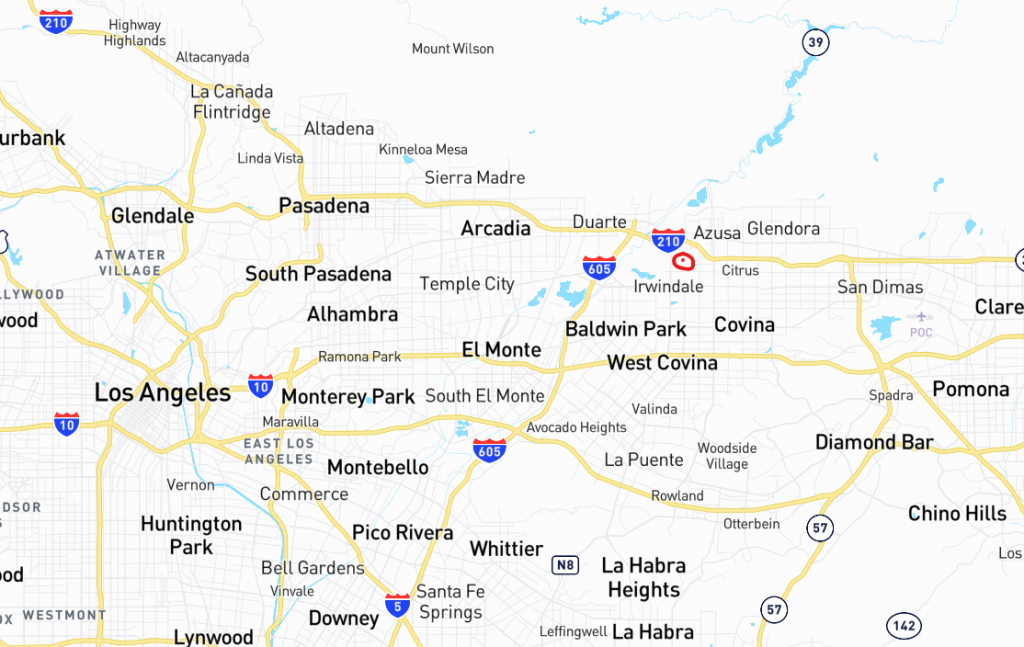
Contractor Yard For Lease

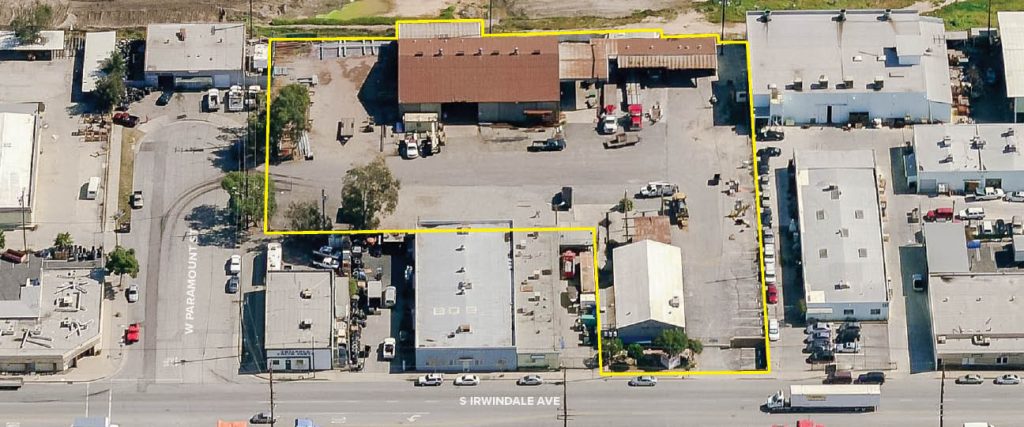
Hard to find large fenced yard with warehouse and office buildings. Listing for lease for 3-5 years. San Gabriel location north of City of Industry between Downtown Los Angeles and Inland Empire. San Fernando Valley to west. Los Angeles County.

  • Fenced Yard w/ 2 Street Entrances
  • 7,000 SF 18′ High Metal Warehouse w/ Crane
  • 3,200 SF Warehouse & Offices
  • 77,683 square feet of industrial land.
  • Minutes from 210 & 605 Freeways
  • Equipment Rental/Sales, Contractor Yard
  • Trucking, Trailer Storage
  • Former tenant installed a clarifier for equipment washing.
  • Vehicle Sales/Repair, Fitness/Recreation, Restaurant/Bar. Some uses may require tenant to obtain a minor use permit from city.
  • Contact us for information.

Changes to ASTM Standards for Environmental Due Diligence in 2021

Grassroots® | The Inspection Specialists - Home ...

There is a big change on the horizon that will significantly impact commercial real estate transactions, especially for industrial manufacturing properties with suspected contamination in the building or soil. ASTM E1527-13, entitled Standard Practice for Environmental Site Assessments: Phase I Environmental Site Assessment Process, is the nationally recognized standard for evaluating environmental risk at a commercial property during acquisition or financing.

First released in 1993, the standard has been revised in 1994, 1997, 2000, 2005, and most recently in 2013. The ASTM standards expire every eight years, and ASTM E1527-13 is scheduled to sunset on December 31, 2021.  Therefore, the new standard, ASTM E1527-21, must be finalized and published sometime in 2021.

The ASTM subcommittee in charge of this process is considering updating certain key components to the standard. These changes are sure to have an impact on future commercial real estate transactions. While numerous changes are being proposed, most are relatively minor, aimed at reinforcing the current standard.  A few, however, will have a significant impact on the standard.

If you have been involved in the procurement, preparation, review, or use of a Phase I ESA Report, you know the biggest concern many environmental professionals, buyers/sellers of commercial property, and lending institutions struggle with is “Are there one or more Recognized Environmental Conditions [RECs] at the subject property?”. Just what defines a REC has progressed through revisions to ASTM E1527 in an effort to clarify this most critical concern. The forthcoming ASTM E1527-21 standard will likely update the definition of a REC.

To heighten awareness, E1527-21 proposes to include Per- and polyfluoroalkyl substances [PFAS]  and other emerging contaminants in Non-Scope Considerations that some environmental professionals and end-users may want to evaluate as part of a Phase I ESA report.

How long is a report good for? EPAs All Appropriate Inquiries [AAI] Rule mandates specific components to be conducted within 180 days of the date of the property purchase or intended transaction. These components are 1) interviews with owners, operators, and occupants; 2) environmental cleanup lien research; 3) visual inspection of the property and adjoining properties; 4) review of government records; and 5) declaration by an environmental professional. After one year, the entire Phase I ESA report must be updated to meet the AAI Rule.

The above text was excerpted from Omni Environmental Group.

If you own and wish to sell a suspected environmental impacted property in Southern California then please contact us so we can present it to a buyer that specifically seeks this type of commercial real estate acquisition opportunity.

Market Snapshot 2021-Q1

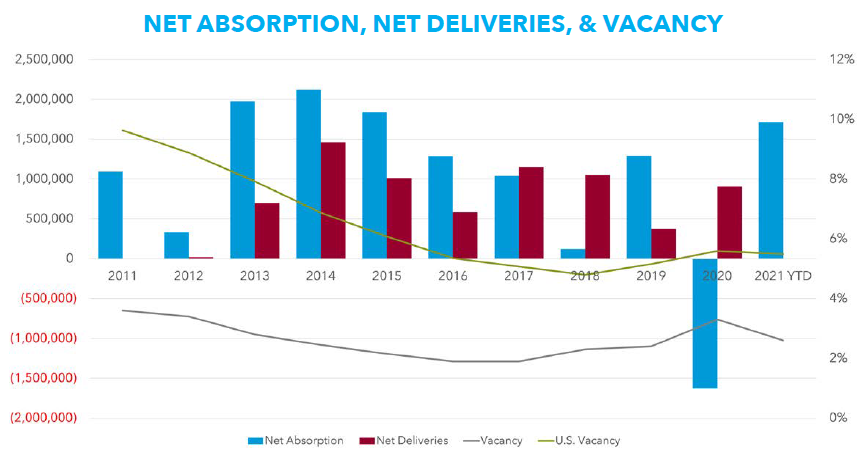
Central Los Angeles industrial submarket overview with absorption and vacancy rate.

Supported by the phenomenal growth of e-commerce, leasing activity was strong in the first quarter after the steep declines experienced earlier in early 2020. In Q1, across the Central Market, 139 leases were signed for a total of 2,836,295 SF; the average asking rate was $0.96 PSF. Q1 leasing volume for Central LA was 25% higher than Q1 2020 levels. Another 133 warehouse properties, totaling 2,000,000 SF, were sold in the period with an average price of $291.43 PSF. The average rate will move up or down slightly quarter-to-quarter depending on how many older, functionally obsolete warehouse and manufacturing buildings are in the pool of available inventory. The limited amount of available first-generation, Class A space leases at a premium to the average rate.

Sold Warehouses Q4-2020 in Los Angeles

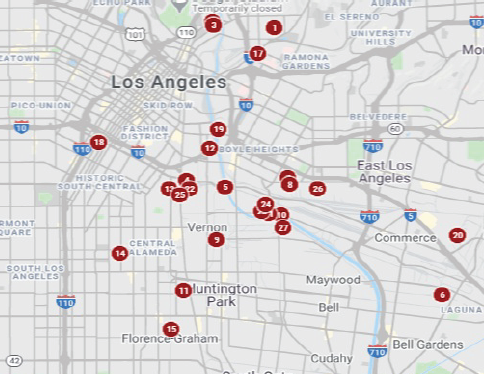
Map of sold buldings

Below is a list of industrial real estate listings that were sold in the 4th Quarter of 2020 over 10,000 square feet in size in the Central Los Angeles industrial submarket. Information includes: buyer, seller, sale price, square footages, and property features for warehouses and manufacturing buildings.